
Catch the Killer — Or Just Catch Someone?
Your word prompt this week is CATCH

Writing Prompts

Catch the Killer — Or Just Catch Someone?
Esther Chilton’s Writing Prompt — CATCH
21 October 2026
“Catch the killer!”
Three simple words. Three words every grieving family desperately wants to hear followed by another three:
“We found them.”
But what happens when the determination to catch a killer becomes more important than finding the truth?
I’ve been following the Faith Hedgepeth murder trial, and something presented in court has left me furious.
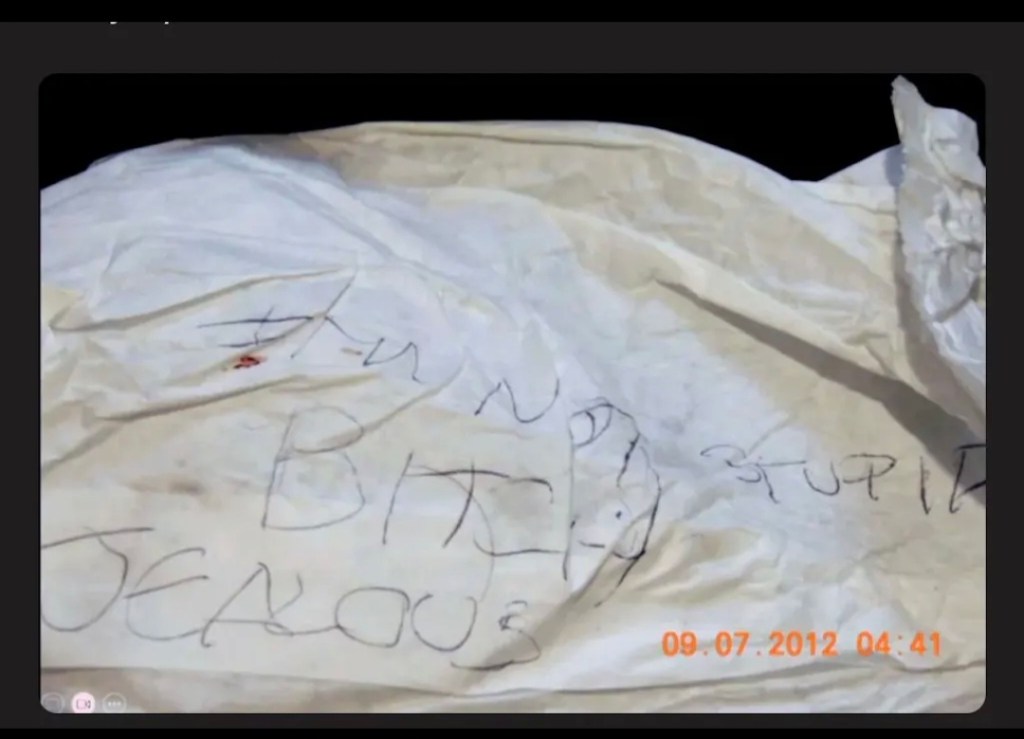
A detective introduced an image reportedly recovered from the defendant’s laptop, containing handwritten words, as part of a handwriting comparison.
But there was a rather significant problem.
The image appeared to match an old viral internet meme.
A meme!
Something that could potentially have been checked with an internet search.
And yet, according to the courtroom testimony I’ve been following, investigators had years to examine this material before it was presented in court.
How does that happen?
How can evidence be treated as meaningful without first establishing where it originated?
And if something so easily questioned makes its way into a courtroom, what confidence should we have that everything else has been thoroughly examined?
A murder trial is not a guessing game.
There is a victim whose life was brutally taken. There is a grieving family waiting for answers. And there is a defendant whose future depends on the integrity of the evidence presented.
Every one of them deserves better than assumptions.
Detectives are human. They can make mistakes. But mistakes must be acknowledged, especially when someone’s liberty is at stake.
What troubles me most is the apparent lack of accountability when questionable material is challenged.
Where is the apology? Where is the explanation?
And perhaps most importantly, where is the determination to make sure it never happens again?
I am not saying this incident proves anyone’s innocence or guilt. That is for the evidence and the court to determine.
But I am saying that justice demands more than simply catching someone.
It demands checking, questioning, verifying, and sometimes admitting that an investigative theory might be wrong.
Because catching the wrong person doesn’t solve a murder.
It creates another injustice while leaving the original one unresolved.
So perhaps the question should never be merely:
“Did you catch the killer?”
Perhaps it should be:
“Did you follow the evidence wherever it led, even when it challenged everything you believed?”
Because justice is not about winning a case.
It is about finding the truth.
💜
For Esther Chilton’s Writing Prompt — 21 October 2026.
With love, coffee, poetry, and stardust,
— Maggie The Afterlove Voice 💫

My new song “Silenced-but-not-broken ” is out on streaming platforms.
https://ditto.fm/silenced-but-not-broken
If you want a reading, send me an email:






Leave a Reply