13 December
There are days in the Nordic calendar that live not only in time, but in the body.
Santa Lucia — 13 December — is one of them.
Lucia arrives at the darkest point of the year, when winter has settled deeply into the bones of the land. She comes dressed in white, a red sash at her waist, candles crowning her head — light walking forward through darkness.
The modern Lucia celebration, as we know it today, took form in the early 20th century and grew in popularity after 1927, when a Stockholm newspaper held a competition to select a Lucia. Interestingly, the first winner was dark-haired, yet over time the image evolved into the now familiar fair-haired Lucia — a symbol shaped as much by culture as by myth.
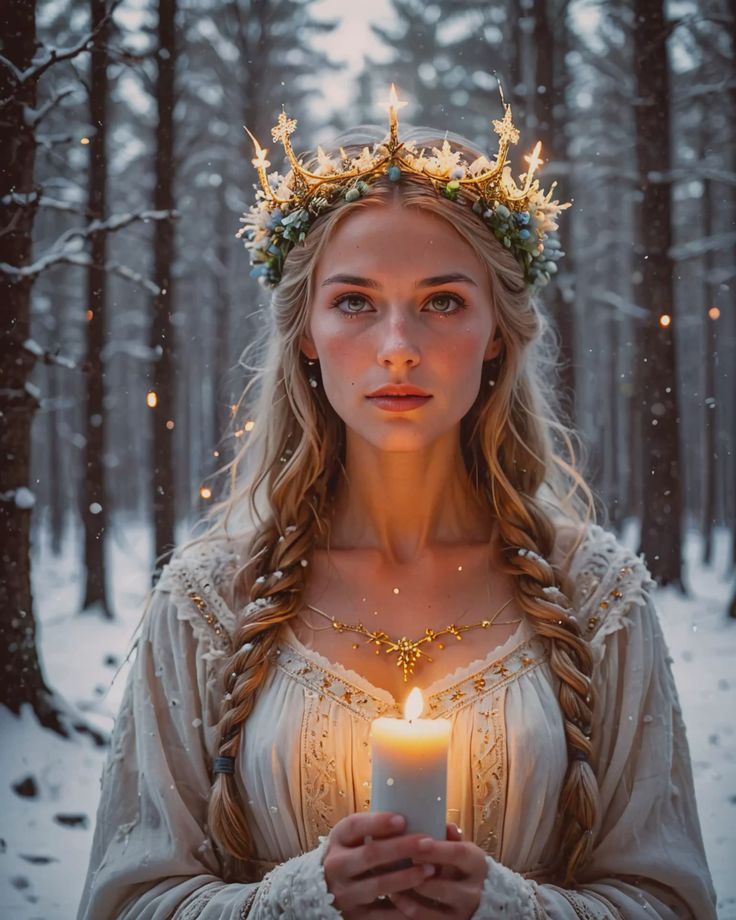
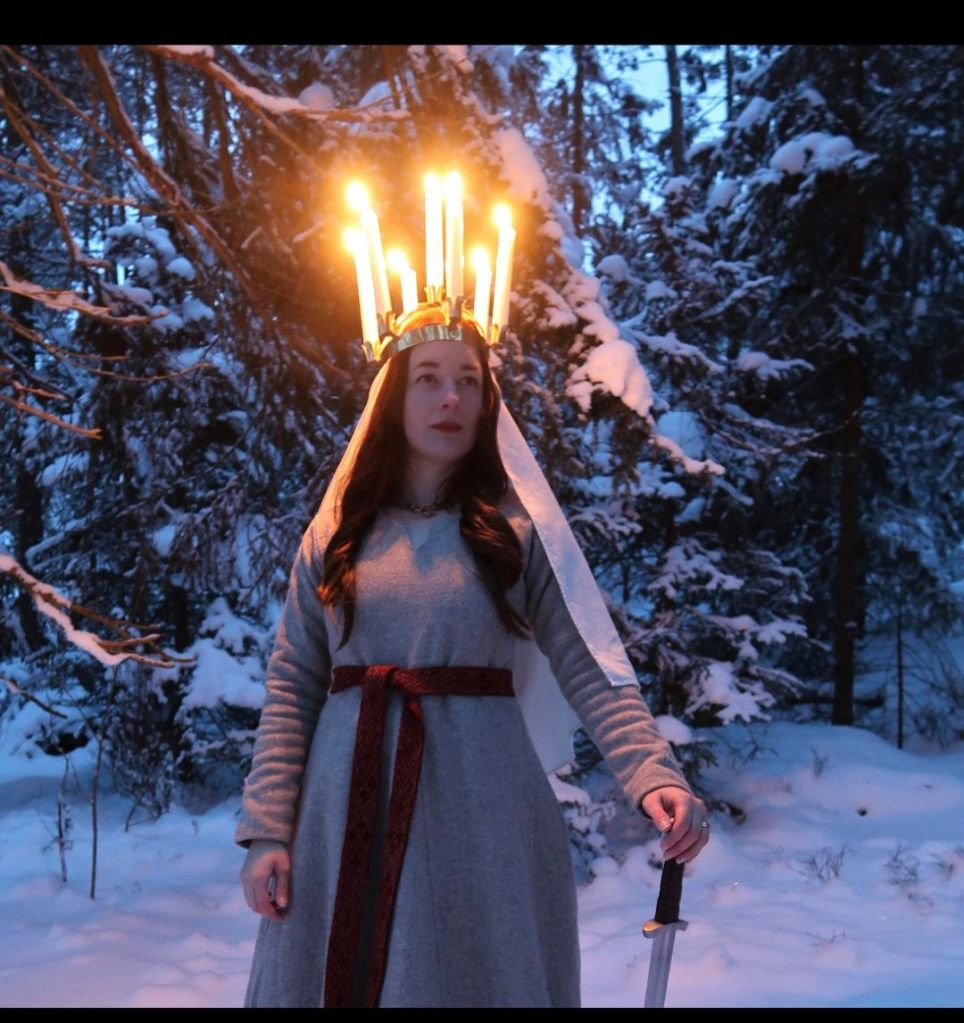
On the morning of 13 December, Lucia is honoured across Sweden, Norway, Denmark, and Finland. A young woman leads a candlelit procession, followed by girls in white gowns carrying candles. The flames represent the fire that, according to legend, refused to take Saint Lucy’s life when she was sentenced to be burned for her faith.
As they walk, they sing the Lucia song — set to the melody of the Neapolitan Santa Lucia. Where the original Italian lyrics describe the shimmering waters of Naples, the Scandinavian versions speak of light overcoming darkness, soul-light moving through winter.
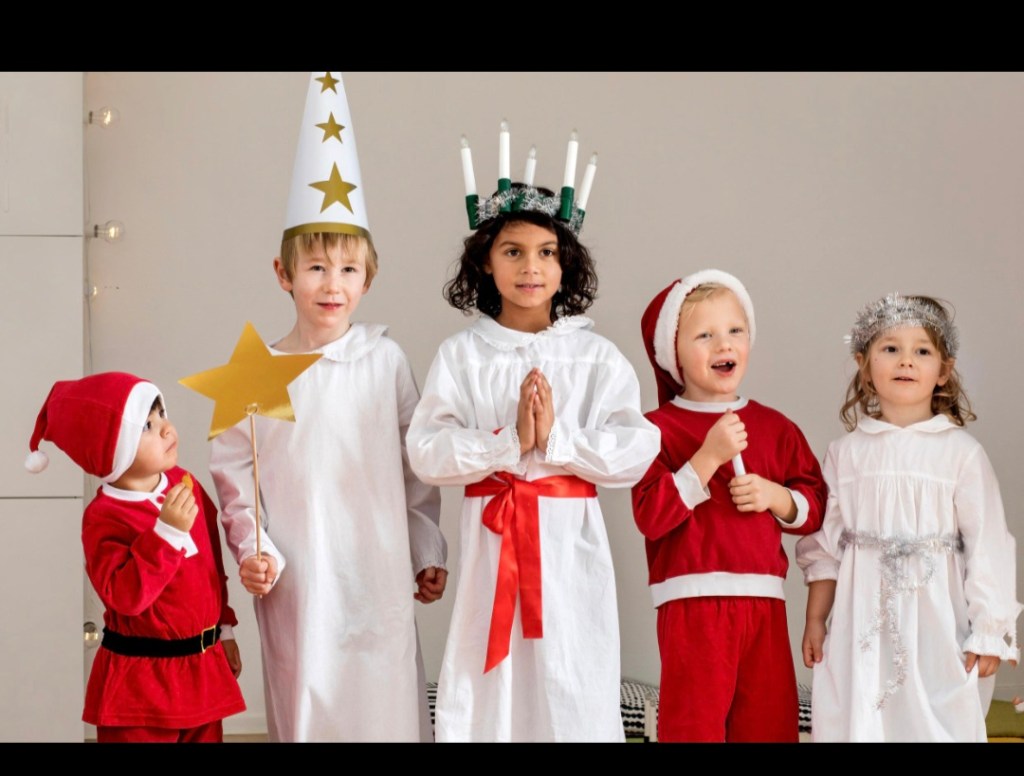
Boys join the procession too, taking on ancient and playful roles:
Stjärngossar (star boys), wearing white robes and cone-shaped hats decorated with golden stars
Tomtenissar, Santa’s elves, carrying lanterns
Even gingerbread men, reminding us that joy and tradition belong together
They sing their own songs, often Staffan Stalledräng, telling the story of Saint Stephen caring for his five horses — another echo of devotion and service woven into song.
Some trace Lucia’s rebirth to older European traditions. In German Protestant homes, girls once dressed as angelic Christ children — Christkind — wearing candle wreaths and handing out sweets. In Sweden, this figure was known as Kinken Jes, appearing in upper-class households in the 18th century. Others believe Lucia evolved from ancient Swedish customs of star boys and white-clad angels singing during Advent.
However it came to be, the image we recognise today — a woman in white, crowned with light, walking into the winter morning — began around Lake Vänern in the late 18th century, slowly spreading across the country through the 19th century.
And then, there is the taste of Lucia.
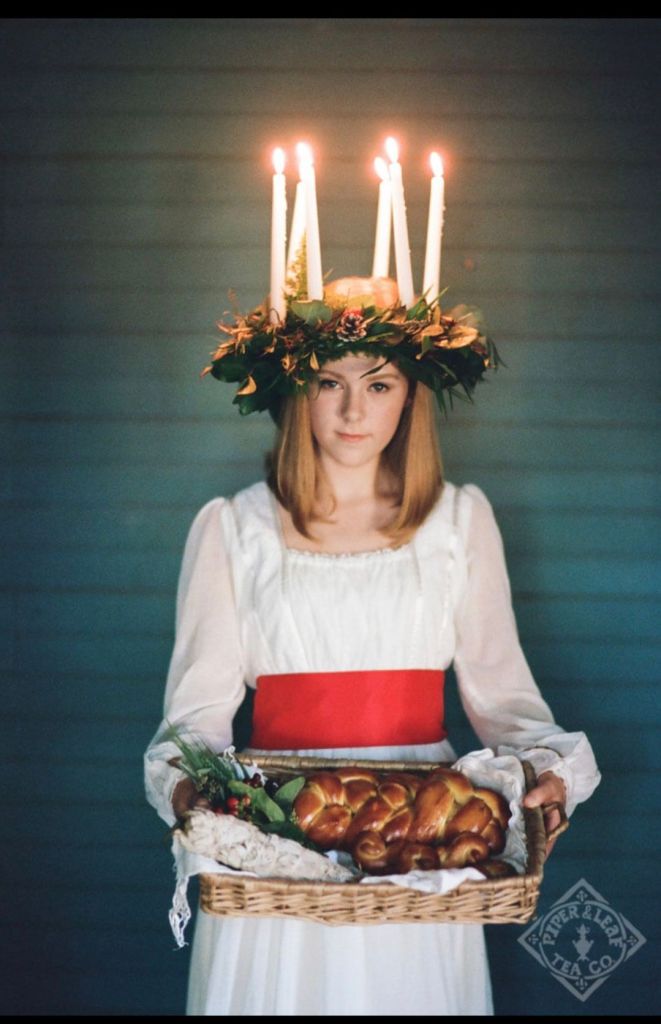


No Lucia Day is complete without Lussekatter — golden saffron buns shaped like curled suns. Made with precious saffron and baked as early as November, they carry warmth, colour, and memory. Each bun feels like a small promise: that the light will return.
For me, Lucia is not just a tradition.
It is a feeling.
A remembering of winter mornings, candlelight against snow, voices soft and steady in the dark. A reminder that even in the deepest night, we carry light — and sometimes, we are meant to wear it for others.
Happy Santa Lucia 🤍
May her light walk gently with you.
🕯️✨
💫Maggie
The Afterlove Voice 💫








Leave a comment