Sometimes history isn’t in museums. Sometimes it sits quietly in the volcanic dust, looking at the ocean, half-buried, half-remembered — waiting for someone to ask questions.
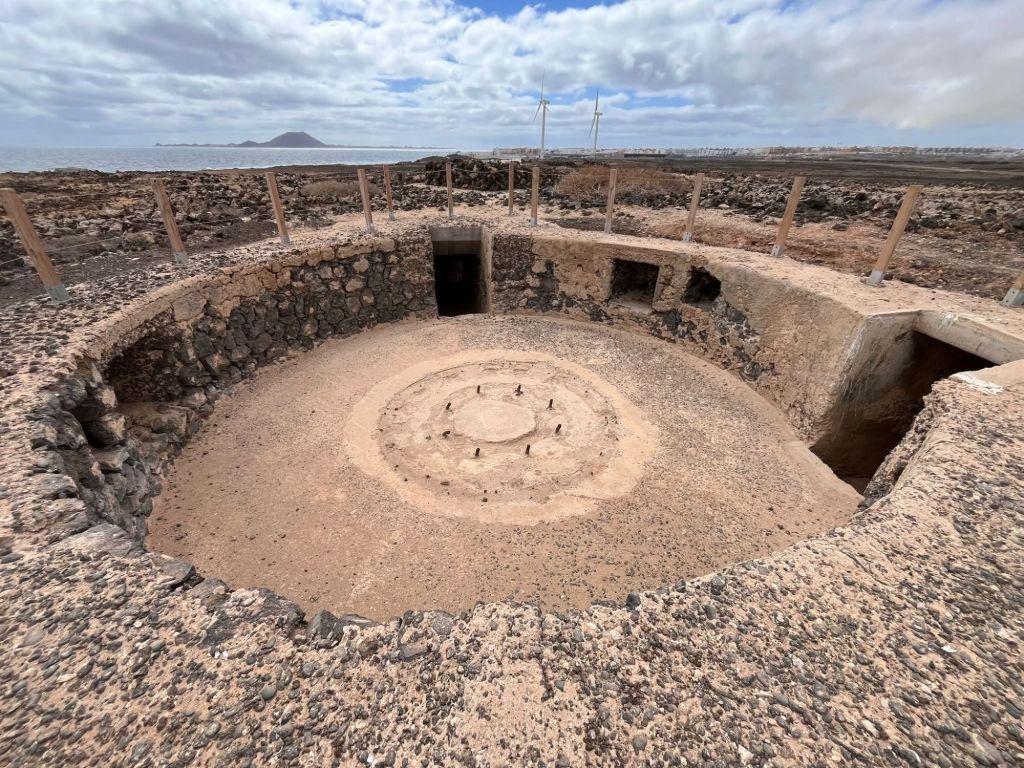
A few days ago I stumbled across a photo and a long Facebook comment about a strange circular structure here on my island, Fuerteventura. At first glance it looks almost ceremonial, like something ancient or ritualistic — but it isn’t. It’s not a temple of the aboriginal Mahos. It’s not a sacred star wheel, though it feels like one.
It’s a bunker.
A scar from World War II.
And as someone who lives here, who walks this land and feels its stories beneath my feet, I needed to understand more.
Why Did Fuerteventura Have Bunkers?
Spain was officially neutral during World War II, but “neutral” didn’t mean safe. Franco’s regime feared that the Allies — especially the British — might invade the Canary Islands to control the Atlantic sea routes.
And in fact… they actually considered it.
There was a real British contingency plan called Operation Pilgrim, which proposed seizing the islands if Spain shifted toward the Axis powers or threatened Allied strategy. The operation was never carried out, but the possibility was serious enough to worry Spain.
So Franco fortified the Canary coasts.
And Fuerteventura, with its open coastline, became part of that defensive line.
What These Structures Really Are
Across our island there are dozens of wartime fortifications — from small machine-gun nests to larger gun emplacements like the one in the photo. Many were strategically placed along beaches, rocky shores, and high coastal viewpoints.
Some key facts historians generally agree on:
• These are World War II defensive positions.
• They were built to deter or slow down a possible Allied landing.
• Many were never actually used in combat.
• Several were later abandoned, buried, vandalized, or simply forgotten.
The circular structure I saw online is believed to have been part of an artillery emplacement, likely designed to hold a mounted coastal gun. The bolts in the middle would have anchored the base. Surrounding spaces could be for ammunition storage, equipment, or shelter.
Standing in front of the ocean with wind turbines now turning in the background… history suddenly feels very close, and very strange.
Were They Built With Forced Labour?
This is where things become complicated — and where Facebook comments can blur into myth.
It is documented that Franco used Republican prisoners and forced labour in many military and civil construction projects across Spain. That is sadly part of Spanish history.
But when it comes specifically to Fuerteventura’s WWII bunkers, clear, direct documentation proving forced prisoner labour here is limited and not yet definitively established in official historical sources I’ve been able to find.
So it’s important to say:
• The story fits broader Spanish history.
• But we must be careful not to present assumption as fact.
These islands deserve truth, not exaggeration — and the people who suffered deserve accuracy.
Bunkers… Then Pigs… Then Silence
One strange part of local memory is what happened afterwards.
With the war long over and the bunkers unused, they eventually turned into storage spaces, makeshift shelters, and yes… according to local accounts, even places where pigs were kept.
Time tried to cover them up.
Authorities buried some. Sand swallowed others. A few have since been restored. And others have quietly been re-occupied by people again.
War ghosts turned into practical shelters. Brutal structures turned accidental farm buildings. History layered awkwardly upon itself.
Only Fuerteventura could hold all of that with such quiet dignity.
Walking Where History Still Breathes
If you explore the island’s coastline — especially along the east and north — you can still find these structures watching the sea. They aren’t museums. They aren’t polished. They don’t have glossy tourist boards or gift shops.
They’re raw history. Concrete bones. Silent storytellers.
They remind us:
• that even neutral islands feel the weight of global fear
• that war always leaves scars, even when not a single shot is fired
• that landscapes remember, even when humans forget
Why Tell This Story?
Because this island isn’t just beaches and sunshine. It is ancient, sacred, wounded, resilient. It has carried empires, storms, migrations, dictatorships, and dreams.
And I believe stories like these deserve to be remembered with respect — not sensationalism, not rumor — but curiosity, care, and wonder for the land that still holds them.
If you ever visit one of these bunkers, stand still for a moment. Listen to the wind. Feel the volcanic ground. Look at the ocean. And remember that history is not far away — it is beneath our feet.
💫Maggie
The Afterlove Voice 💫






Leave a comment