For Friday Faithfuls this week, I would like you to join in and share anything about weather or climate or how Earth changes.

Current Ice Age
When the Weather No Longer Feels Ordinary 🌍
Friday Faithfuls — 18 September 2026
When I read Jim’s prompt about weather, climate and the changing Earth, I thought about how much our planet has changed over millions of years.
Ice ages. Volcanoes. Shifting continents. Changes in Earth’s orbit.
The Earth has never been completely still.
We are even living in a warm interval of an ice age today, with great ice sheets remaining in Greenland and Antarctica. The current interglacial began around 11,700 years ago.
But when I think about climate change, my mind doesn’t travel millions of years into the past.
It goes straight to this week.
Here in Spain, we have watched devastating flooding sweep through parts of the country. Roads and streets disappeared beneath the water, and a man lost his life after his vehicle was swept away.
My heart goes out to his family and to everyone affected. 💔
And here on Fuerteventura, we have been experiencing a very different kind of weather.
We had two calima episodes with only a few days between them.
Normally, when the Saharan dust arrives, the sky takes on a yellow or orange colour. The landscape becomes hazy, and sometimes the Sun looks like a glowing red ball.
But this last calima was different.
It looked like a white wall.
My oldest daughter took photographs from the car. The familiar hills seemed to disappear into the pale haze, and the sky and landscape almost merged into one. Even looking down the road, it was difficult to make out much of the distance.
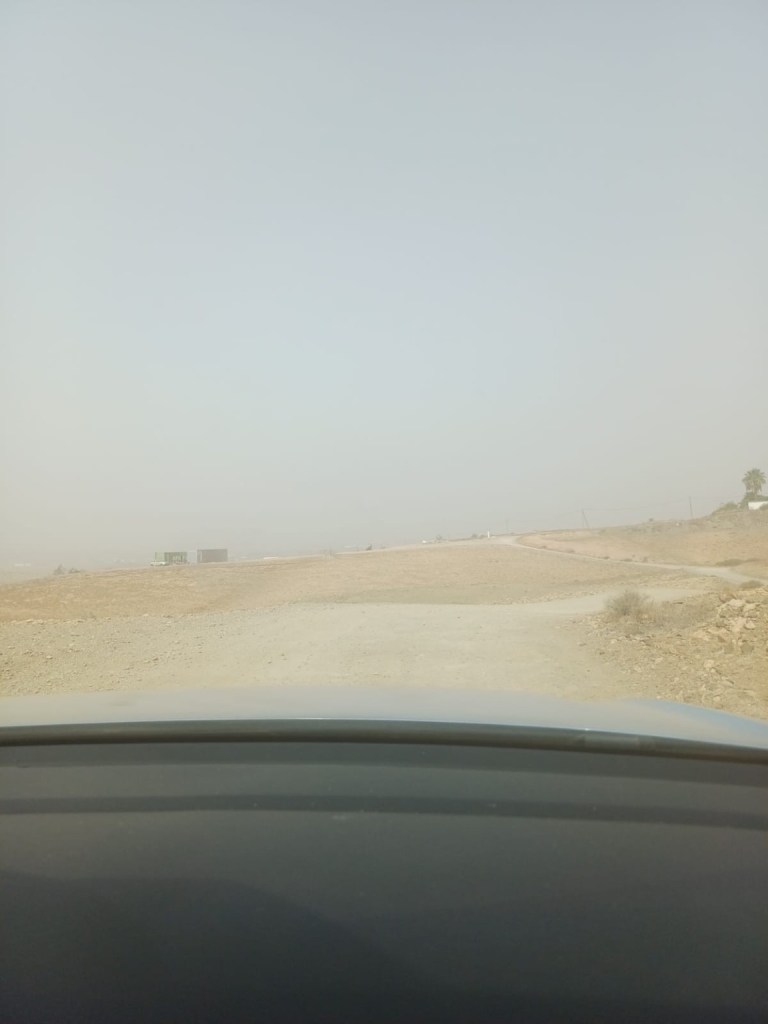
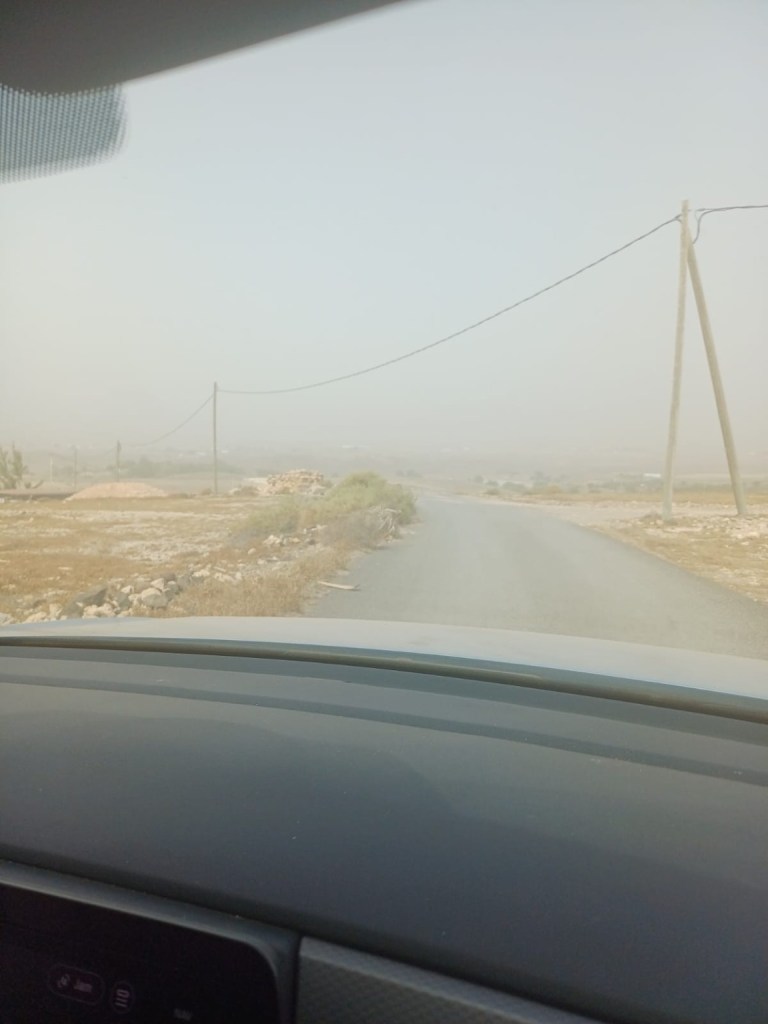
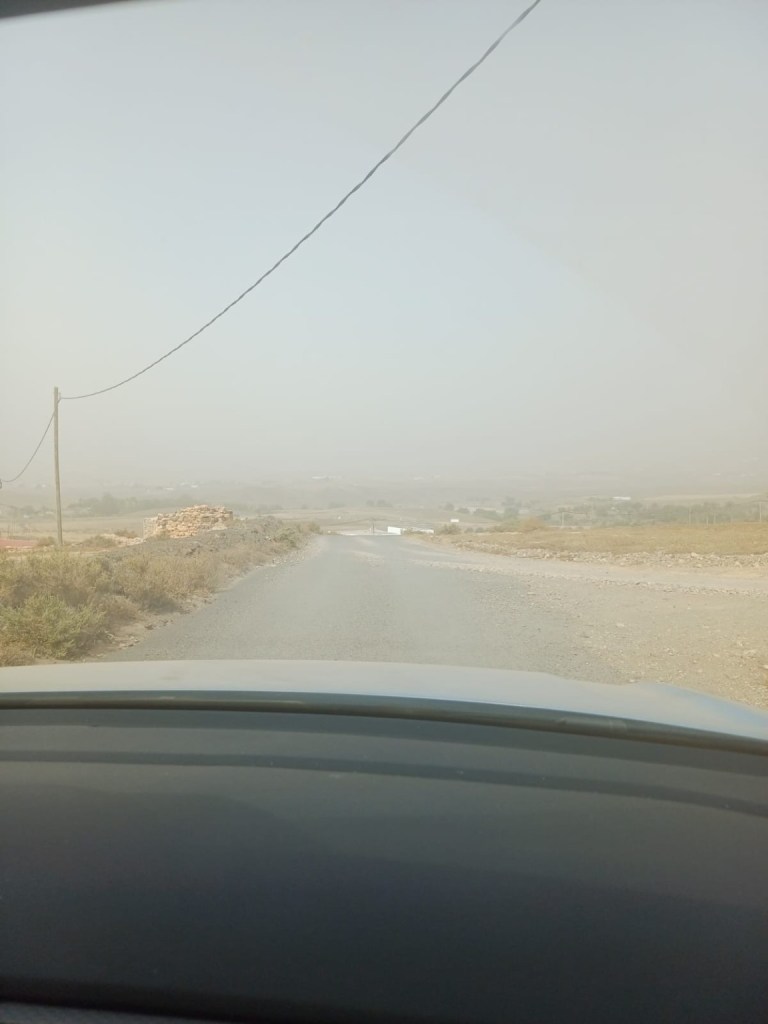
By Tuesday, the calima was affecting everyday life across Fuerteventura. All the schools on the island were closed.
When the dust is thick enough to disrupt an entire school day, it brings home that this is more than an unusually hazy sky. Families have to rearrange their days, and everyone has to think about the air they’re breathing.
Then there was the heat.
For three nights, the temperature did not fall below 30°C (86°F).
One evening, our thermometer showed 31.6°C inside the house and 30.9°C outside.
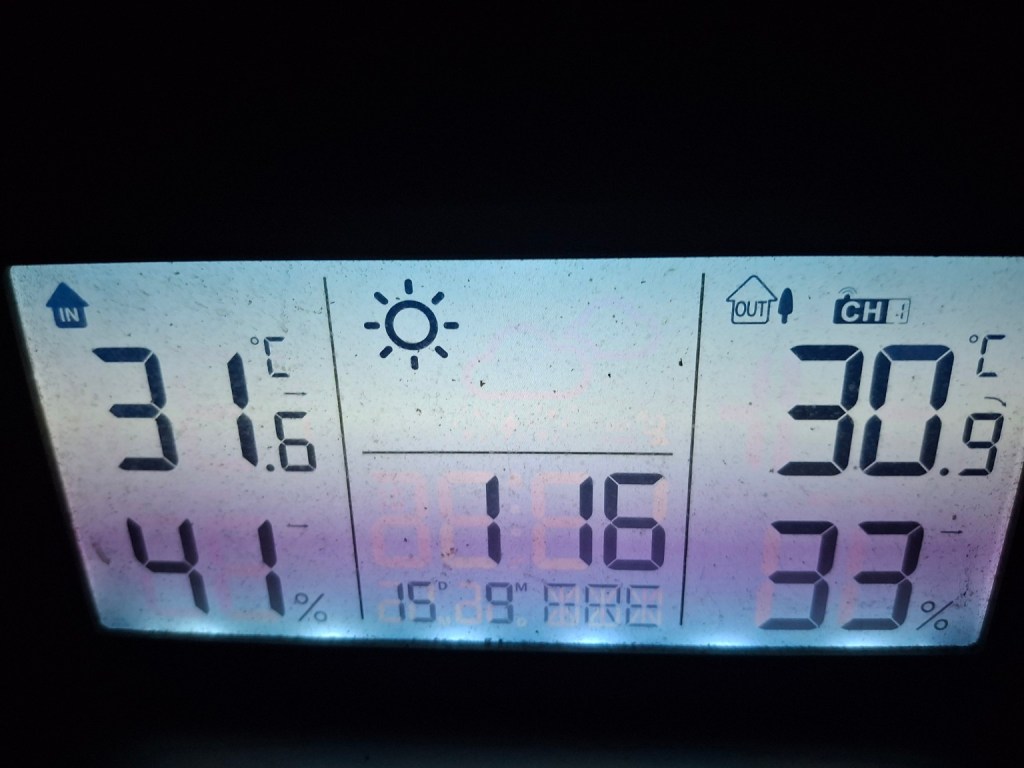
There is something exhausting about waiting for the evening to bring relief, only to discover that the night is almost as hot as the day.
You open the door, hoping for a cooler breeze.
Except during a calima, opening the doors and windows isn’t such a simple solution.
We have to keep them closed as much as possible to stop the dust entering our home. Breathing in that fine dust is a concern, especially because both my husband and I have heart problems.
So there we are, trying to keep the dust outside while the heat stays trapped inside.
And our house has another little complication.
We live up in the mountains, completely off-grid. Since moving here in 2023, our electricity has come from solar panels, with a generator for backup when the weather is bad.
Our system has a 1,500-watt power limit, so we cannot simply assume that we can switch on an air conditioner. We have to think carefully about how much electricity each appliance uses and how much energy we have stored.
Most of the time, I appreciate our solar-powered life.
During a calima, though, I would dearly love to be able to cool the house down without worrying about the power supply.
Eventually, I found myself spending hours sitting in the car with the air-conditioning running, simply to escape the heat.
At 10:08 in the morning, the temperature outside was already 34.5°C.
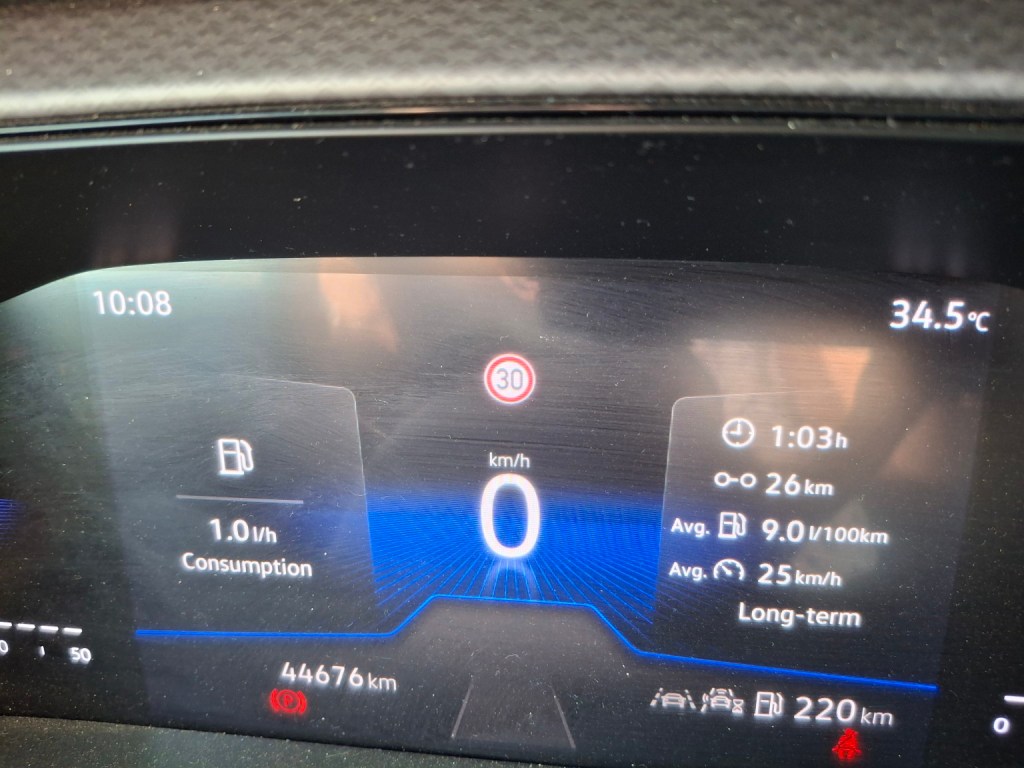
Later, my car showed 38°C.
It sounds almost funny to say I was practically living in my car, but when the house is unbearably hot, the windows have to stay closed against the dust, and you cannot just switch on an air conditioner at home, you look for relief wherever you can find it.
For a little while, that relief was my car.
It made me realise how easily something we take for granted — a cool room and a comfortable night’s sleep — can become a luxury.
And then, finally, on Wednesday, the calima disappeared.
We could sit outside again.
We stayed there until 2:30 in the morning, enjoying the fresh air we had missed so much.
It was wonderful.
Until the mosquitoes arrived. 🤣
Apparently, nature had decided we’d had quite enough peace and quiet for one week.
First the Sahara, then the mosquitoes. 😂
I know that weather and climate are not the same thing. A single storm, heatwave or calima cannot tell us everything about the planet’s changing climate.
But scientists have established that human-caused warming is changing the conditions in which extreme weather happens. A warmer atmosphere can hold more moisture, and rising temperatures increase the risks associated with extreme heat.
That is what concerns me.
Not simply that the Earth changes — it always has.
It is how quickly our climate is changing now, and what those changes mean for the people, animals and places we love.
Wildfires destroy homes and habitats.
Floodwater can turn an ordinary journey into a tragedy.
Heat can make it difficult to sleep, breathe or carry out the simplest daily tasks.
And somewhere in the middle of all this, we still have to get up in the morning, make our coffee and carry on with life.
I don’t think we need to be frightened of every cloud or every hot day.
But I do think we need to pay attention.
To the science.
To the warnings.
To the people whose lives have already been affected.
And to the changes we can see outside our own windows — even when those windows have to stay firmly closed against the dust.
The Earth has survived enormous changes before.
The question that stays with me is what kind of world we are leaving for the generations who come after us.
Because when the night refuses to cool, the horizon disappears behind a wall of dust, and the news brings another story of lives lost to flooding, climate change no longer feels like a distant discussion.
It feels very close to home. 🌍💜
With love, coffee, poetry, and stardust,
— Maggie The Afterlove Voice 💫

My new single is out
https://ditto.fm/silenced-but-not-broken
Lyrics video
If you want a reading, send me an email:







Leave a comment