The sadness I felt at the Maidens’ Houses didn’t come from the stones themselves.
It came from something older—something my mind didn’t know, but my body seemed to recognize.
I remember standing there as the wind moved over the dry earth, and suddenly the present slipped away.
In its place came flashes.
Visions.
Like memories that didn’t belong to this lifetime.
I saw young girls and women living in those caves.
Not free—kept apart, almost like they were being preserved or protected, depending on who was telling the story.
But what I felt was restriction.
A quiet suffering.
The silence women hold when they are doing what they must, not what they choose.
One scene was so clear it stole my breath:
A group of these women walking down a long, steep path toward the sea.
Not a small journey.
Not an easy one.
The kind that takes hours, bare feet against rock, heat pulsing down from the sun.
They walked in silence—yet the silence was full of meaning.
Forbidden glances.
Hidden longings.
Men and boys watching from shadows, thinking they were unseen.
But the women knew.
Women always know.
And then I saw something that I’ve never read in any book or museum:
The women were in sync—their cycles aligned, their bodies moving with the moon.
They went to the sea not just to bathe, but to purify, to reconnect with something sacred and ancient.
It was a ritual older than the island itself, carried through their bloodline.
A knowing.
It felt so real, so familiar, like something I had once done myself.
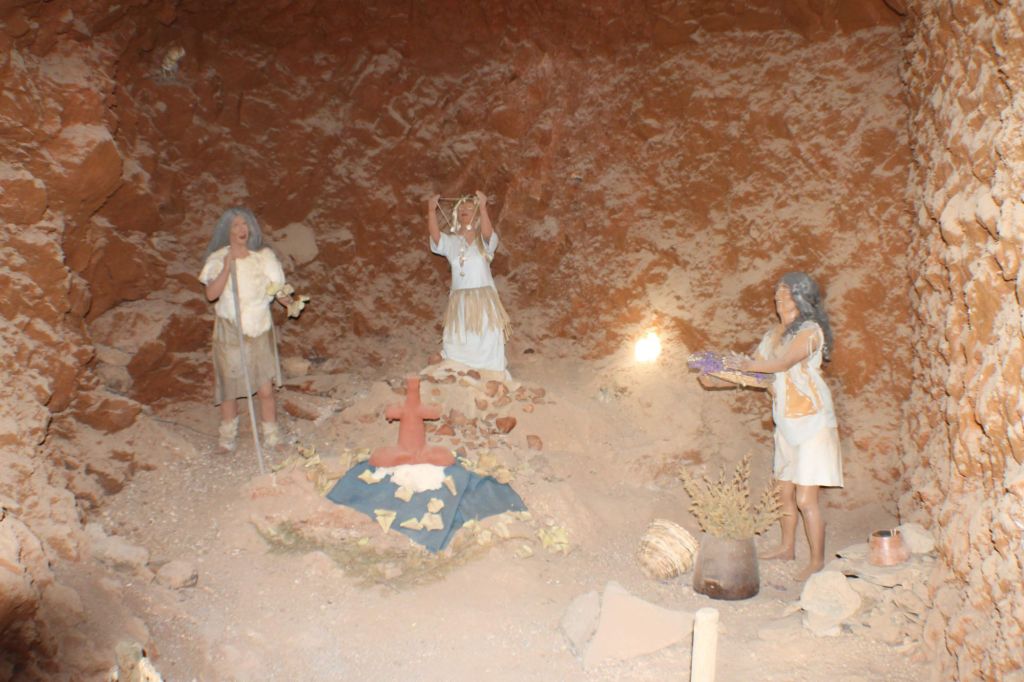
Then came another flash—stronger, brighter.
A circle of women: the Faycanes.
Healers.
Midwives.
Keepers of herbs and songs and secrets.
The ones who knew how to ease pain, bring children safely into the world, and speak to the spirit of the land.
When I saw them, something inside me lit up.
I saw myself tracking the moon phases with stones.
Reading the stars the way I now read astrology charts—
but simpler, more primal.
No books, no tools.
Just instinct.
Just connection.
The sky as a living map.
It didn’t feel like imagination.
It felt like memory.
But the final place we visited that day was different.
Dark in a way that lingered.
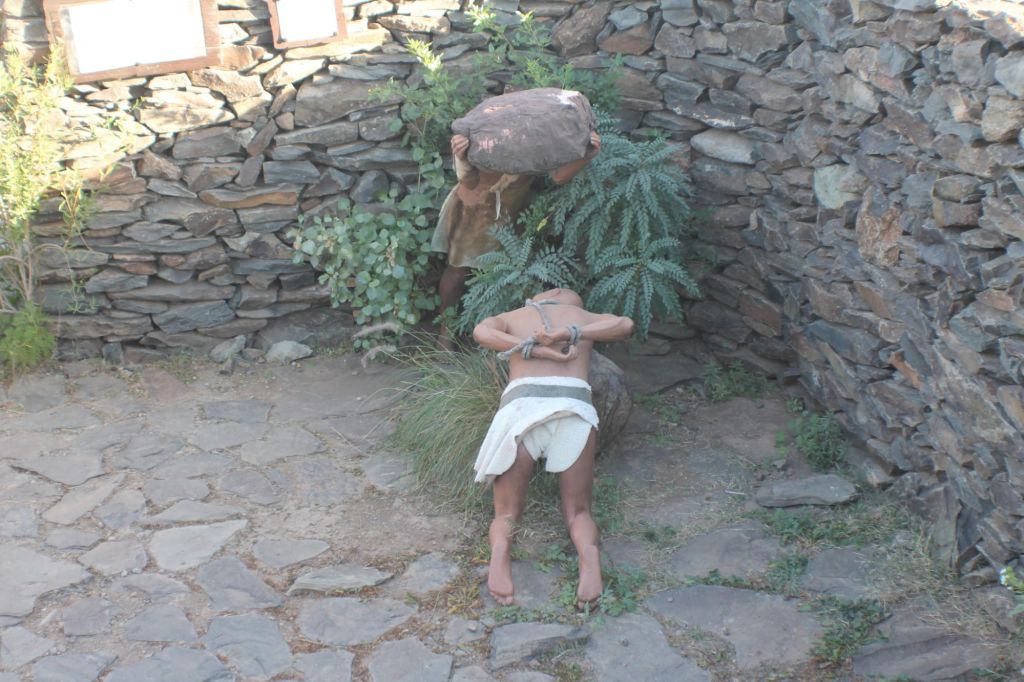
The execution site.
The moment I stepped near it, my stomach clenched.
My skin went cold.
In another flash, I saw the punishment:
A prisoner kneeling, hands tied behind their back, their head placed on a stone “block.”
The executioner lifting a large stone—the final, brutal blow.
My body reacted before my mind did.
I felt sick, lightheaded.
I couldn’t stay there.
I moved away quickly, as if pulling myself out of a scene I had once witnessed—or lived.
There are places on this island that hold beauty.
Other places hold sorrow.
And some hold truth that goes deeper than history, deeper than archaeology.
Some truths live in the land.
Others live in the soul.
And sometimes, if you stand still enough,
the two begin to speak to each other.
We didn’t linger after that.
Something about the execution site changed the air around us.
My two youngest tugged at my hand, eyes wide, whispering,
“Can we go back to the goats?”
Their innocence broke the heaviness like sunlight through a cloud.
My husband tried to make sense of it all in his logical way.
He said it was their only form of justice, that without prisons they did what they could.
Maybe he was right.
But logic didn’t soften the feeling in my chest.
I drifted toward the animal pens with my two youngest, grateful for the life and movement there.
My oldest came running after us, breathless, saying she didn’t want to go any further into that part of the park.
She had walked ahead and realized what the place was before any of us reached her.
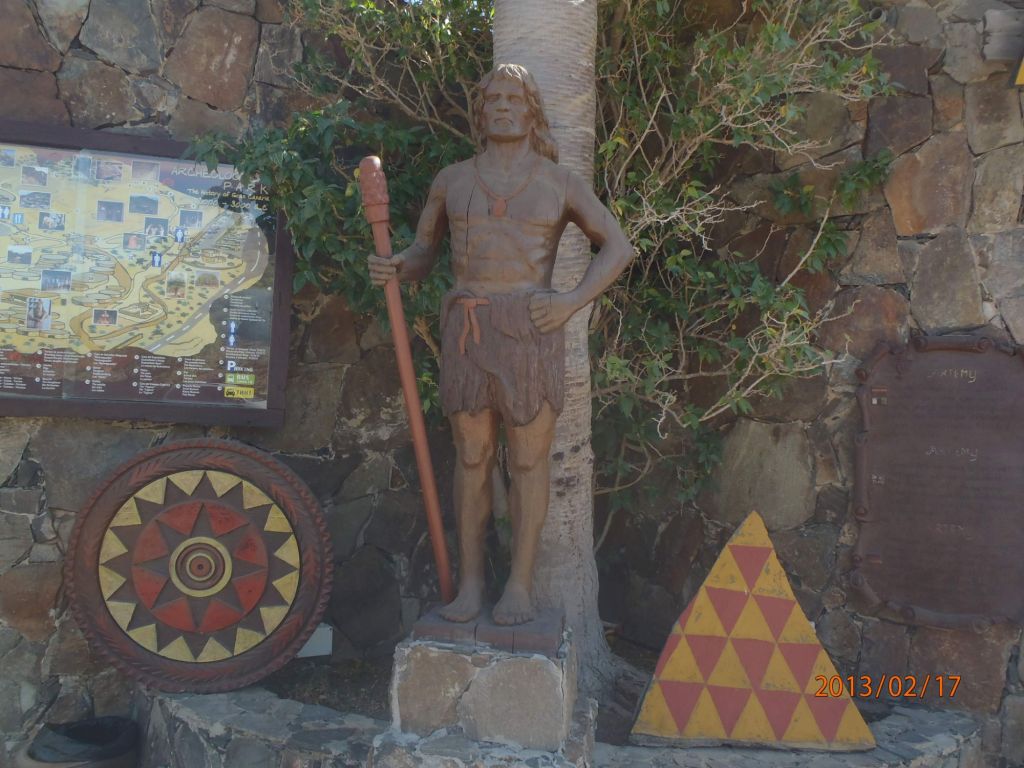
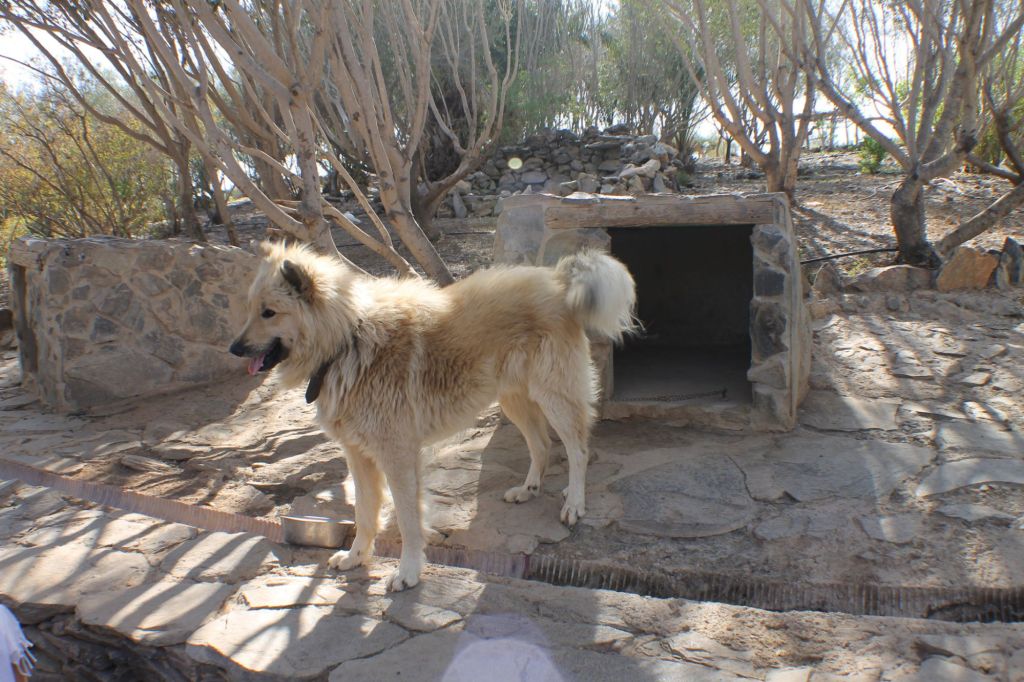
We wandered back toward the entrance slowly, letting the gentler parts of the park ground us again.
The sun was starting to lower, covering everything in that warm, honey-colored light the Canary Islands are famous for.
At the reception area, I gathered maps and small souvenirs, pieces of history I felt compelled to take home.
The man working there smiled and told us to keep driving up the road,
“Go to the pueblo of Fataga. It’s beautiful. You will love it.”
And so we did.
We got into the car, turned up the steep, winding road, and followed it into the heart of the mountains.
That was the day I first saw Fataga.
That was the day something in me recognized a place I had never seen before.
We returned to that village many times in the years to come—
and even went back to the archaeological park once more, a couple of years later.
But nothing ever felt as intense as that first visit.
Some places introduce themselves gently.
Others open a door inside you that you didn’t know was there.
That first trip did both.
The Next Chapter is about Fataga, and Molino de agua. 😍
Hasta pronto. See you soon.
💫Maggie
The Afterlove Voice 💫
🌿 Chapter One : The Island That Spoke First — Gran Canaria
Whispers of the First Islanders: A Journey into the Aboriginal Spirit of the Canary Islands-Series
🌿 Chapter Two: Mundo Aborigen — Where the Old Ones Still Speak





Leave a comment